
Breathlessness in an older adult can come from the lungs, heart, blood, medicines, nerves or loss of conditioning, and a sudden change can be dangerous. You will learn how to judge urgency, compare hospital capabilities, prepare for a respiratory evaluation and understand what common tests can—and cannot—show.
Key takeaways
- Seek emergency care for oxygen saturation below 90% or blue lips.
- Choose a hospital with pulmonology, critical care, imaging and emergency support.
- Bring medication lists, previous scans and oxygen readings to the first evaluation.
- Ask how treatment, oxygen use and follow-up will fit your daily routine.
When breathing trouble needs emergency care
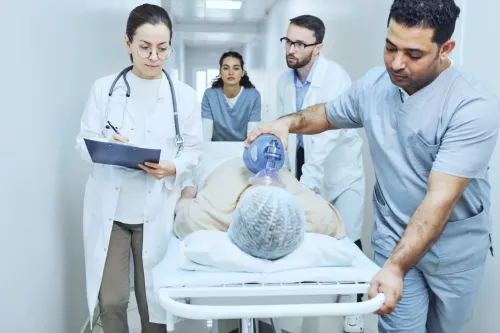
Breathlessness at rest, blue or grey lips, new confusion, fainting, severe chest pain, coughing blood, or oxygen saturation below 90% requires emergency assessment. Call emergency services rather than arranging a routine pulmonology appointment, especially when symptoms began suddenly or are worsening.
| Situation | What to do | Examples |
|---|---|---|
| Emergency now | Go to an emergency department immediately | Breathlessness at rest, inability to speak full sentences, blue lips, confusion, fainting, severe chest pain, oxygen saturation below 90%, or more than a small streak of blood when coughing |
| Same-day hospital assessment | Seek care today for examination, oxygen measurement and testing | New or worsening breathlessness, oxygen saturation of 90–92%, fever with rapid breathing, suspected pneumonia, repeated wheezing, a small amount of blood in sputum, or symptoms in a frail adult with heart or lung disease |
| Routine pulmonology appointment | Book a planned visit when symptoms are stable | Breathlessness only with usual exertion, a cough lasting weeks without red flags, gradually worsening exercise tolerance, stable wheeze, loud snoring or daytime sleepiness |
A routine visit is suitable for investigation, not for deterioration. Searching “respiratory doctor Nagarabhavi” can help locate a specialist, but sudden symptoms belong in a hospital with emergency oxygen assessment, ECG and imaging when indicated. Do not let a normal home oxygen reading overrule severe symptoms or confusion.
Why older adults need more than a lung diagnosis
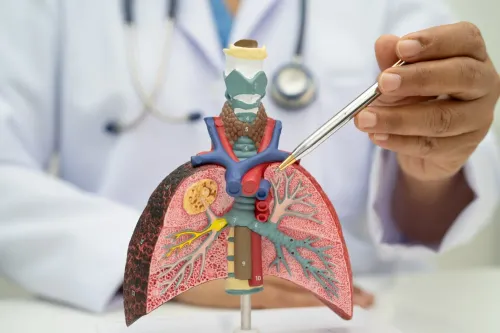
Breathlessness in an older adult can come from the lungs, heart, blood, medicines, muscles or nervous system, so a lung diagnosis alone is not always enough. COPD, asthma, pneumonia, pulmonary fibrosis, lung cancer, aspiration and sleep apnoea are important possibilities, but heart failure and coronary disease can produce the same tired, breathless feeling.
| Pattern | Possible clue | Assessment to add |
|---|---|---|
| Breathlessness lying flat, ankle swelling or waking gasping | Heart failure or coronary disease | Cardiology review, ECG and echocardiography |
| Fatigue, pallor, dizziness or worsening after a new medicine | Anaemia or medication effect | Internal medicine review and blood tests |
| Choking during meals, a wet voice or repeated chest infections | Aspiration or swallowing disorder | ENT assessment and swallowing evaluation |
| Weak cough, limb weakness, falls or breathlessness with normal lung tests | Neuromuscular disease | Neurology assessment and functional testing |
Deconditioning and anxiety can worsen symptoms, but do not label breathlessness as anxiety until heart, lung and systemic causes have been assessed. Spirometry, oxygen measurement, chest imaging, a full blood count and ECG often help separate these causes; echocardiography or specialist referral follows the findings.
If you are searching for lung specialist Nagarabhavi or a respiratory doctor Nagarabhavi, ask whether the service coordinates cardiology, internal medicine, ENT and neurology. A multispecialty hospital is useful when symptoms are complex or worsening because imaging, laboratory testing, respiratory support, critical care and several specialists are available in one pathway.
A straightforward stable problem may still be managed efficiently by a qualified pulmonologist or neighbourhood clinic.
What to verify before choosing a super speciality hospital
A search label such as “super speciality hospital for breathing problems in Bengaluru” does not prove clinical capability. Verify the doctor’s registration with the National Medical Commission or Karnataka Medical Council, plus postgraduate training in respiratory medicine or pulmonology. A “pulmonologist in Bengaluru” should also explain who covers emergencies when the named doctor is unavailable.
Check these capabilities before choosing a super speciality hospital in Bengaluru:
| Check | Verify | Why it matters |
|---|---|---|
| Doctor credentials | Medical registration and postgraduate pulmonology or respiratory-medicine training | Search terms do not establish qualification |
| Emergency cover | 24-hour emergency medicine, oxygenation assessment, ECG and urgent imaging | Breathlessness can deteriorate before a clinic appointment |
| Respiratory support | Non-invasive ventilation, invasive ventilation and an intensive-care unit | Severe respiratory failure needs more than oxygen by nasal prongs |
| Diagnostics | CT, CT pulmonary angiography when indicated, bronchoscopy and pulmonary-function testing | A normal chest X-ray does not exclude every serious lung condition |
| Recovery support | Respiratory physiotherapy and monitored discharge planning | Weakness, secretion retention and poor mobility can prolong recovery |
| Specialist coordination | Cardiology, internal medicine, infectious-disease and thoracic-surgical access | Heart failure, tuberculosis, cancer and surgical problems can mimic lung disease |
Ask whether suspected tuberculosis triggers sputum and molecular testing, respiratory precautions, contact tracing and public-health linkage. Confirm that imaging is ordered from clinical risk, since unnecessary CT adds radiation and incidental findings.
At ABHANI LAKEVIEW HOSPITAL, ask how pulmonology coordinates with internal medicine and cardiology for an older adult whose breathlessness has more than one possible cause.
Related service
PULMONOLOGIST PULMONOLOGIST Abhani Hospitals is a trusted destination for advanced Pulmonology treatment in Nagarbhavi, Bangalore, offering expert care for a wide range of lung... |
What happens at the first respiratory evaluation
Bring a complete medication list, inhalers, previous scans and reports to the appointment. Note when breathlessness began, whether it occurs at rest or with walking, night-time symptoms, cough, fever, wheeze, chest pain, choking episodes and recent infections. Record smoking, biomass-fuel, occupational and pet exposures.
Take the actual inhaler and arrange a family member to attend if memory, hearing or mobility is an issue.
Prepare by:
- Taking prescribed medicines as directed unless the clinic gives different instructions.
- Wearing loose clothing and bringing details of walking distance, falls and sleep symptoms.
- Avoiding an unplanned strenuous journey before testing; ask whether any inhaler or caffeine restriction applies.
- Showing the clinician how you use the inhaler. Technique, adherence and the ability to load, press or inhale the device can explain treatment failure.
The clinician chooses tests from the examination and risk history, not from the label “breathing problem.”
| Test | What it shows | When it applies |
|---|---|---|
| Pulse oximetry, repeated | Oxygen level; not the cause | Low or inconsistent readings need a repeat, and sometimes blood-gas testing |
| Spirometry before and after bronchodilator | Airflow limitation and reversibility | Suspected asthma or COPD |
| Chest X-ray | Pneumonia, fluid, mass or other visible change | Initial assessment; a normal result does not exclude every serious lung disorder |
| CT or CT pulmonary angiography | Detailed lung or blood-vessel findings | Suspected fibrosis, embolism or cancer; radiation and incidental findings matter |
| ECG, blood count and echocardiogram | Heart rhythm, anaemia and cardiac function | Breathlessness that may not be lung-related |
Making treatment manageable after diagnosis
A discharge plan fails when the older adult cannot carry it out at home. Before leaving, ask the team to reconcile every medicine, remove duplicates, and demonstrate the actual inhaler device while the patient repeats the technique.
Increasing inhaler strength without checking technique, adherence, vision, hand strength and memory can add side effects without improving breathing.
Long-term oxygen is not a general remedy for breathlessness. Use it only after documented assessment, with a written target oxygen saturation and a date for reassessment; excessive oxygen can worsen carbon-dioxide retention in susceptible patients.
The discharge checklist should include:
- A printed medicine schedule showing dose, timing, duration and what changed.
- A supervised demonstration of inhaler, nebuliser or oxygen equipment.
- Written warning signs and a telephone number for urgent advice.
- Follow-up with the appropriate specialist, including the date and tests needed.
- An assessment of walking safety, cognition, caregiver availability and access to medicines.
Record oxygen readings under the conditions the clinician specifies, rather than reacting to one isolated number. Report a sustained decline, new confusion or inability to speak and walk as usual promptly. Arrange physiotherapy or pulmonary rehabilitation when weakness and deconditioning limit activity.
The plan also needs a named caregiver who understands the instructions; a technically successful hospital treatment can fail if nobody can administer medicines or recognise deterioration.
Frequently asked questions
When does breathing trouble in an older adult need emergency care?
Seek emergency assessment for breathlessness at rest, blue or grey lips, new confusion, fainting, severe chest pain, coughing blood, oxygen saturation below 90%, or symptoms that began suddenly or are worsening.
Why do older adults need more than a lung diagnosis?
Breathing symptoms can involve heart disease, infection, medication effects, weakness, swallowing problems and other conditions. Assessment should account for these factors, along with mobility, memory, nutrition and existing illnesses.
What should you verify before choosing a hospital for breathing problems in Bengaluru?
Check for 24-hour emergency care, pulmonology, intensive care, oxygen support, imaging, laboratory services and access to cardiology or other relevant specialists. Ask who coordinates care after diagnosis.
What happens during the first respiratory evaluation?
The clinician reviews symptom timing, medical history and medicines, checks vital signs and oxygen saturation, examines the chest and decides whether tests such as a chest X-ray, blood tests, electrocardiogram or spirometry are appropriate.
How can treatment become manageable after diagnosis?
Ask for a written medication schedule, inhaler-use demonstration, warning signs, oxygen instructions when prescribed, follow-up timing and a plan that accounts for mobility, memory, caregiving and other daily needs.
Keywords