Severe back or neck pain needs the right level of care, not simply the most prominent specialist label. By checking warning signs, matching symptoms to the appropriate clinician and understanding what imaging can and cannot prove, you can decide between emergency assessment, an outpatient consultation and a spine-surgery opinion.
Key takeaways
- Go to emergency care after major trauma or new bladder, bowel, or leg weakness.
- Choose an orthopaedic spine surgeon for bone and disc problems.
- Choose a neurologist for diagnosis of nerve symptoms without immediate surgery.
- Compare the scan findings, proposed procedure, risks, recovery, and second opinion.
When Back or Neck Pain Is an Emergency
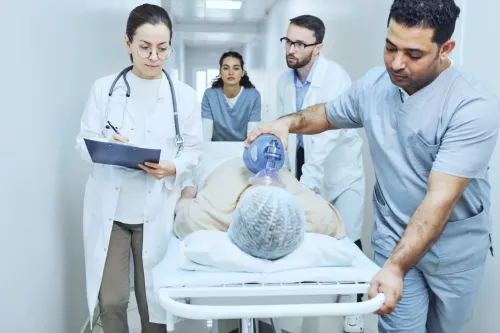
Go straight to a hospital emergency department after a road crash, fall, or other major trauma, especially if the pain is severe. Do not spend time comparing an ortho doctor in Bengaluru, neuro surgeon in Bengaluru, or back pain specialist Nagarabhavi when a spinal injury or compression is possible.
Seek immediate assessment for:
- New weakness in an arm or leg, rapidly worsening weakness, paralysis, or difficulty standing or walking
- New clumsy hands, loss of hand coordination, imbalance, or a changed walking pattern with neck pain
- Numbness around the inner thighs, buttocks, or genitals (saddle numbness)
- New inability to pass urine, urinary retention, loss of bladder control, or loss of bowel control
- Severe back or neck pain with fever, particularly if you feel acutely unwell
- Severe spinal pain with a history of cancer, unexplained weight loss, or known spinal infection risk
These signs can indicate spinal-cord compression, cauda-equina syndrome, infection, fracture, or cancer-related disease. Delay can leave weakness or bladder and bowel dysfunction permanent. The emergency team can perform a neurological examination, arrange urgent MRI or CT when indicated, and involve a spine specialist.
Pain shooting from the neck into an arm or from the back into a leg does not automatically require the emergency department; it often reflects an irritated nerve root. Go urgently if that pain comes with progressive weakness, numbness that is spreading, or trouble walking.
Choosing Between an Orthopaedic Spine Surgeon, Neurologist and Neurosurgeon
For a non-emergency problem, choose the clinician whose expertise matches the dominant symptom—not simply the label “orthopaedic” or “neurosurgeon.” Orthopaedic spine surgeons and neurosurgeons both diagnose and operate on spinal disorders. A neurologist is useful when the cause may involve nerves, muscles or the brain and can refer you for surgery when needed.
| Option | Best first choice when | What to verify |
|---|---|---|
| Orthopaedic spine surgeon | Pain appears mechanical, follows an injury, or involves a structural bone, disc or joint problem | Spine-specific training and experience with your diagnosis or proposed operation |
| Neurologist | Numbness, weakness, shooting pain, tremor, muscle wasting or unclear nerve symptoms need diagnosis | Neurological examination, appropriate testing and a referral plan if compression requires surgery |
| Neurosurgeon | Imaging or examination suggests spinal-cord, nerve-root or complex structural compression | Relevant spine practice, expected benefit, risks and non-operative alternatives |
Do not delay emergency assessment to search for an ortho doctor in Bengaluru, neuro surgeon in Bengaluru or “back pain specialist Nagarabhavi.” Go to a hospital emergency department for new bladder retention or incontinence, bowel loss, saddle numbness, rapidly worsening weakness, paralysis, severe pain after a crash, or fever with severe spinal pain.
For planned care, verify the doctor’s current registration through the National Medical Commission’s Indian Medical Register and, where relevant, Karnataka Medical Council records. Ask who will examine you personally, what diagnosis is being treated, whether treatment without surgery was tried, and what happens if symptoms do not improve.
Check the hospital’s MRI, anaesthesia, intensive-care and rehabilitation access separately.
What the Symptoms and First Examination Can Reveal
The first examination separates pain from a muscle or joint from disease affecting a nerve root, spinal cord or spinal structure. Localised tenderness, tight muscles and pain that changes with movement support a musculoskeletal source, especially when strength, sensation, reflexes and walking remain normal.
- Nerve-root irritation often causes shooting pain from the neck into an arm or from the back into a leg, with numbness in a dermatomal pattern. Weakness in a matching muscle group or a reduced reflex strengthens the diagnosis.
- Spinal-cord compression can cause hand clumsiness, dropping objects, stiff or weak legs, imbalance, an altered walking pattern, brisk reflexes or abnormal reflexes in the feet. New neck pain with these findings needs prompt assessment.
- Structural disease becomes more concerning after a significant fall or crash, or with fever, cancer history, unexplained weight loss, night pain or pain that does not vary with position. The clinician checks for deformity, restricted movement and focal spinal tenderness.
- Cauda-equina involvement is suggested by saddle numbness, urinary retention, loss of bladder or bowel control, or rapidly worsening leg weakness. Seek emergency assessment rather than waiting for a clinic appointment.
A lumbar MRI does not diagnose the pain by itself. Disc bulges and degeneration are common without symptoms; a scan matters when its level matches the pain pattern and examination deficit. Sciatica often improves without surgery, while decompression is considered when persistent symptoms, examination findings and imaging identify the same compressed nerve.
Which Scan Answers Which Spine Question?
Imaging is useful when you suspect serious disease, neurological deficit, fracture, infection or tumour, or when the result will change treatment. Routine scans for uncomplicated back pain can reveal harmless abnormalities and create pressure for unnecessary procedures.
| Scan | Best answer | What it cannot prove |
|---|---|---|
| X-ray | Shows alignment, fractures, arthritis, deformity and instability; standing or movement views can reveal slipping | It does not show nerves, discs or spinal-cord compression clearly |
| CT scan | Gives detailed views of bone, fractures, narrowing and complex anatomy | A small disc or nerve injury can remain unclear; radiation exposure is higher than with X-ray |
| MRI | Shows discs, nerve roots, spinal cord, infection, tumour and soft tissues without radiation | A bulging disc or narrowing can exist without causing pain |
Read the report alongside your symptoms and examination. A lumbar disc protrusion is more convincing when it matches shooting leg pain in a specific nerve distribution or an objective weakness, numbness or reflex change. An alarming phrase such as “severe degeneration” does not identify the pain’s cause by itself.
Surgery needs a defined, treatable problem—not a dramatic scan. Ask whether the finding explains your symptoms, whether non-surgical treatment has improved pain or function, and what benefit surgery is expected to provide. If those answers are unclear, obtain a second opinion from a spine-trained surgeon before choosing an operation.
When Surgery Is Considered and How to Compare Care
Do not choose elective surgery because pain is severe or an MRI report sounds alarming. Choose it for a defined problem, such as persistent nerve-root compression, spinal-cord compression, instability, fracture, infection or tumour, after the expected benefit outweighs the risks.
Before agreeing, ask:
- Who will personally examine you and perform the operation?
- What diagnosis is being treated, and which scan finding matches your symptoms?
- What non-surgical treatment was tried, for how long, and what happened?
- How much improvement in pain, strength or function is realistic?
- What are the material risks, including nerve injury, infection, blood clots and repeat surgery?
- What is the plan if symptoms do not improve?
If weakness is rapidly worsening, bladder or bowel control changes, or spinal-cord compression is suspected, go to a hospital emergency department instead of comparing surgeons online.
| Choice | Ask about | Do not assume |
|---|---|---|
| Orthopaedic spine surgeon | Spine-specific training and experience with your condition or operation | “Orthopaedic” alone proves suitability |
| Neurosurgeon | Spine practice, relevant procedure volume and neurological assessment | “Neurosurgeon” automatically means better care |
| Either specialist | Imaging, anaesthesia, intensive care and rehabilitation available at the hospital | The doctor’s specialty label covers the whole care team |
For an ortho doctor or neuro surgeon in Bengaluru, verify current registration and qualifications through the NMC National Medical Register or Karnataka Medical Council, not only a directory listing. A second opinion is sensible when the diagnosis or benefit is unclear, including when comparing spine surgery Nagarabhavi options.
ABHANI LAKEVIEW HOSPITAL is one setting where you can ask how imaging, anaesthesia, emergency backup and rehabilitation are coordinated.
Frequently asked questions
When is severe back or neck pain an emergency?
Seek emergency care after a road crash, fall, or major trauma, especially with severe pain. Immediate assessment is also needed for new leg or arm weakness, loss of bladder or bowel control, numbness around the groin, or difficulty walking.
Should I see an orthopaedic spine surgeon, neurologist, or neurosurgeon?
An orthopaedic spine surgeon treats spinal bone, joint, disc, and alignment problems. A neurologist evaluates nerve symptoms and diagnoses conditions without performing surgery. A neurosurgeon evaluates and operates on disorders involving the spinal cord, nerves, brain, and spine.
Which scan is used for back or neck pain?
X-rays show bones, alignment, fractures, and instability. MRI shows discs, nerves, the spinal cord, infection, and soft tissues. CT gives detailed views of fractures and bone anatomy. The examination determines which scan is useful.
When is spine surgery considered?
Surgery is considered when nerve or spinal cord compression causes progressive weakness, emergency symptoms, severe persistent disability, or a problem that does not improve with appropriate non-surgical treatment. Compare the diagnosis, procedure, alternatives, risks, recovery, and second opinion.
Keywords