Hearing that you may need surgery can naturally create concern.
However, advances in surgical evaluation and minimally invasive techniques mean that many common surgical conditions can be treated safely when diagnosed at the appropriate time.
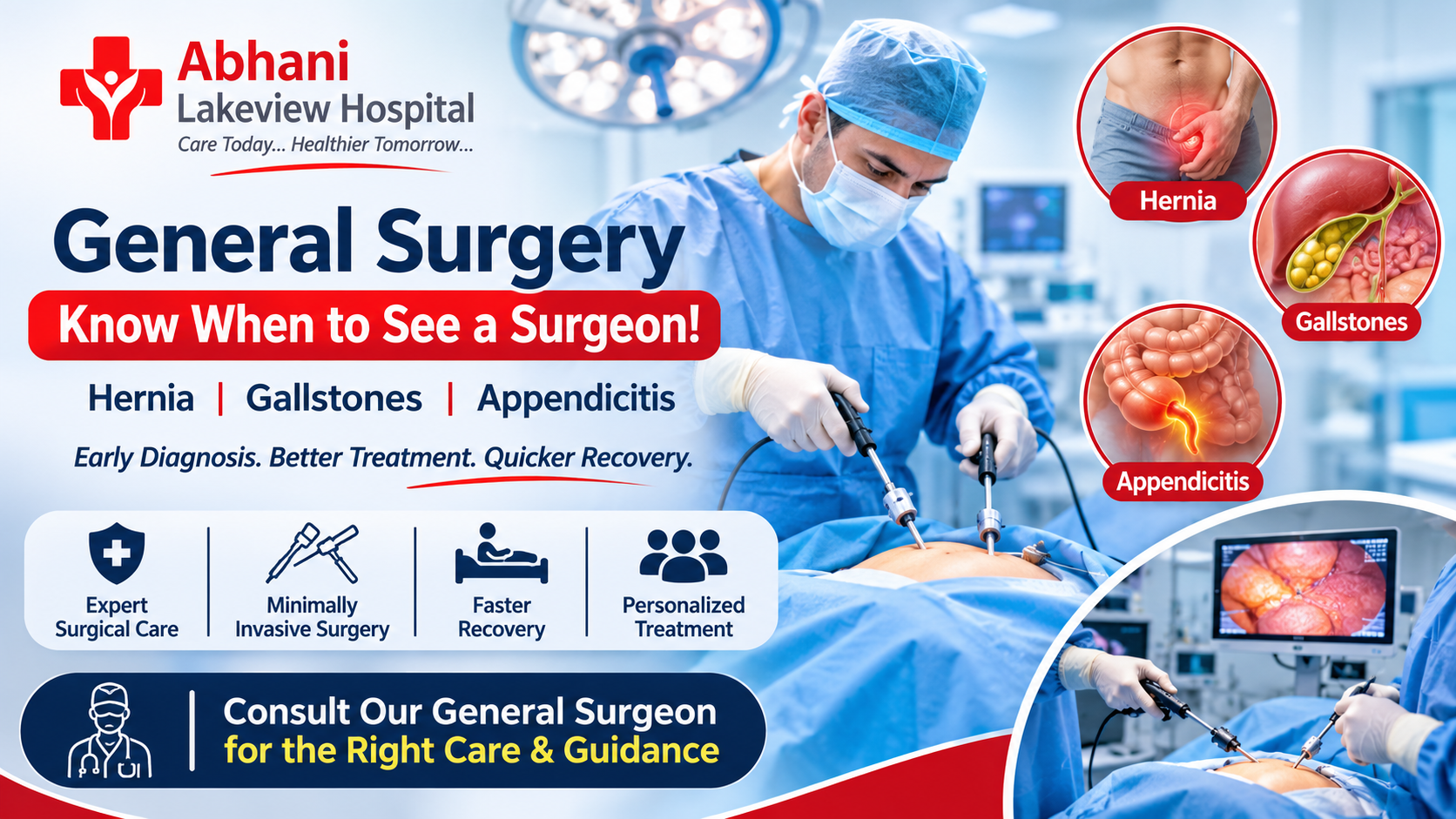
Three conditions frequently assessed by general surgeons include hernia, gallstones and appendicitis.
Understanding their symptoms can help patients know when they should seek medical attention.
What Does a General Surgeon Treat?
General surgeons manage several conditions involving the abdomen, digestive system, skin and soft tissues.
Depending on the condition, treatment may involve medication, observation, lifestyle changes or surgery.
Common conditions treated by general surgeons include:
- Hernia
- Gallbladder problems
- Appendicitis
- Piles and fissures
- Abscesses
- Certain abdominal conditions
- Minor surgical conditions
A surgeon determines whether an operation is required after assessing the patient's symptoms, examination findings and investigations.
Hernia: When Should You See a Surgeon?
A hernia occurs when tissue or an internal structure pushes through a weak area in the surrounding muscle or tissue.
One of the most noticeable symptoms is a swelling or bulge.
It may become more visible when:
- Standing
- Coughing
- Lifting something heavy
- Straining
- Exercising
Some hernias cause little discomfort initially, while others cause pain or a dragging sensation.
Symptoms That Need Medical Evaluation
Consult a general surgeon if you notice:
- A new abdominal or groin swelling
- Pain around the swelling
- Increasing size of an existing hernia
- Discomfort while lifting or coughing
- Difficulty performing routine activities
When Is a Hernia an Emergency?
Urgent medical attention may be required if a hernia becomes:
- Suddenly very painful
- Firm or extremely tender
- Unable to be pushed back
- Associated with vomiting
- Associated with severe abdominal discomfort
These symptoms may indicate that tissue has become trapped and requires urgent assessment.
Gallstones: When Is Treatment Needed?
The gallbladder stores bile, which helps the body digest fats.
Gallstones are hardened deposits that can form inside the gallbladder.
Some people have gallstones without any symptoms.
When symptoms do occur, patients may experience:
- Pain in the upper-right abdomen
- Pain after heavy or fatty meals
- Nausea
- Vomiting
- Pain spreading toward the back or shoulder
The pain may occur suddenly and can last from several minutes to several hours.
When Should You See a Doctor?
Seek medical evaluation if gallbladder-type pain keeps returning.
Urgent medical attention may be required when pain is accompanied by:
- Fever
- Persistent vomiting
- Yellowing of the skin or eyes
- Severe continuous pain
Your doctor may recommend an ultrasound and blood investigations depending on your symptoms.
For patients with recurrent symptomatic gallstones, surgical removal of the gallbladder may sometimes be recommended.
Appendicitis: A Condition That Should Not Be Delayed
Appendicitis occurs when the appendix becomes inflamed.
It can progress quickly and requires timely medical assessment.
One common symptom is abdominal pain that may begin around the centre of the abdomen and later become more prominent in the lower-right side.
Other possible symptoms include:
- Loss of appetite
- Nausea
- Vomiting
- Fever
- Increasing abdominal pain
- Tenderness
Not everyone experiences symptoms in exactly the same way.
For this reason, suspected appendicitis should be evaluated medically rather than diagnosed at home.
Why Prompt Treatment Matters
If appendicitis progresses without treatment, complications can develop.
If you experience severe or rapidly worsening abdominal pain, seek urgent medical assessment.
Avoid taking repeated pain medication simply to suppress unexplained severe abdominal pain without identifying its cause.
What Is Laparoscopic Surgery?
Some surgical procedures can be performed using a minimally invasive technique known as laparoscopy.
Instead of one large incision, the surgeon typically uses smaller incisions along with specialised instruments.
Depending on the procedure and patient, potential benefits may include:
- Smaller incisions
- Reduced postoperative discomfort
- Shorter recovery periods
- Earlier return to routine activities
However, not every patient or condition is suitable for laparoscopic surgery.
The surgeon determines the most appropriate approach after a complete evaluation.
What Happens During a Surgical Consultation?
A consultation generally includes:
1. Medical History
The doctor asks about your symptoms, duration, previous treatment and existing medical conditions.
2. Physical Examination
The affected area is examined.
3. Investigations
Depending on the suspected condition, tests may include:
- Blood investigations
- Ultrasound
- X-ray
- CT scan
- Other diagnostic tests
4. Treatment Discussion
If surgery is necessary, the surgeon explains the procedure, expected recovery, risks and alternatives.
Patients should use this opportunity to ask questions before making an informed decision.
General Surgery Care in Nagarbhavi
Conditions such as hernia, gallstones and appendicitis should not be managed solely through self-medication.
Early evaluation may prevent symptoms from worsening and can allow treatment to be planned more effectively.
If you are looking for a general surgeon in Nagarbhavi, laparoscopic surgery hospital near Muddinapalya or surgical consultation near Annapurneshwari Nagar, Abhani Lakeview Hospital offers general surgical evaluation and treatment support.
Book a Surgical Consultation
Abhani Lakeview Hospital
Muddinapalya Main Road, Herohalli, Annapurneshwari Nagar, Bengaluru – 560091
Call: 9886666581 / 9886666582
Website: www.abhanihospitals.com
This article is for general educational purposes and is not intended to diagnose a medical condition or replace consultation with a qualified healthcare professional.
Keywords