
Sudden chest pressure, severe breathlessness, fainting or collapse requires emergency assessment, not a routine cardiology appointment. By separating danger signs from stable symptoms, you can choose the right care, call 112 when needed and prepare useful information for the clinical team.
Key takeaways
- Choose emergency care for severe chest pressure, spreading pain, breathlessness, sweating, nausea, dizziness, or fainting.
- Cardiac arrest means collapse and absent normal breathing; call 112 and start CPR.
- Call 112 and start CPR when someone is unresponsive and not breathing normally.
- Check 24/7 emergency access, ECG, ambulance transfer, catheterisation referral, and critical-care support near Nagarabhavi.
When should you choose an emergency hospital in Bengaluru?
If you are deciding between an emergency hospital or cardiologist in Bengaluru, choose the emergency hospital in Bengaluru for sudden, severe or persistent chest pressure, squeezing or pain. Do not wait for a routine appointment if discomfort spreads to an arm, back, neck or jaw, or comes with breathlessness, cold sweating, nausea, dizziness or fainting.
- Treat new palpitations as an emergency when they cause fainting, chest pain, severe breathlessness or an unusually fast or slow pulse.
- Seek immediate assessment for new weakness, confusion or collapse, especially with chest symptoms.
- Women, older adults and people with diabetes can have a heart attack without dramatic chest pain. Unusual fatigue, indigestion, breathlessness, dizziness or back pain still need urgent assessment.
- If someone is unresponsive or not breathing normally, call 112, start CPR and use an AED if available. Do not drive them to a cardiologist.
| Situation | Choose | Reason |
|---|---|---|
| Sudden chest symptoms with breathlessness, sweating, nausea or spreading pain | Emergency department | Acute coronary syndrome needs rapid examination, a 12-lead ECG and cardiac troponin testing. |
| Chest symptoms with trauma, severe infection, neurological symptoms, kidney failure or pregnancy complications | Emergency department | More than cardiology may be needed, including imaging, surgery or critical care. |
| Recurrent exertional discomfort that is absent now, palpitations without fainting, high blood pressure or abnormal screening results | Cardiologist appointment | These stable problems suit planned risk review and testing. |
A normal first ECG does not exclude acute coronary syndrome when symptoms continue. New or worsening symptoms require emergency re-triage, not a routine waiting list.
How do heart attack and cardiac arrest symptoms differ?
Chest pressure, squeezing or pain that lasts, returns or spreads to the arm, back, neck or jaw suggests a heart attack and needs emergency assessment, not a scheduled cardiologist appointment. Breathlessness, sudden sweating, nausea, dizziness or fainting strengthen the warning, especially when symptoms began during exertion.
| Situation | What you may notice | What to do |
|---|---|---|
| Suspected heart attack | Chest discomfort, breathlessness, sweating, nausea, fainting or spreading pain | Call 112; do not drive yourself or wait for a cardiologist in Bengaluru |
| Cardiac arrest | Collapse, unresponsiveness, no normal breathing or only gasping | Call 112, start CPR and use an AED if available |
| Less immediately dangerous pattern | Brief, position-related pain or familiar symptoms that settle completely without red flags | Arrange prompt medical review; seek emergency care if the pattern changes |
Women, older adults and people with diabetes can have a heart attack without dramatic chest pain. Unexplained fatigue, indigestion, upper-back pain, breathlessness, dizziness, weakness or a sudden decline in exercise tolerance deserve urgent attention. Diabetes can blunt pain, so do not dismiss these signs as acidity or tiredness.
Palpitations with fainting, chest discomfort, breathlessness or an unusually fast or slow pulse are emergencies. New one-sided weakness, facial drooping or trouble speaking may indicate stroke; call 112 immediately. A normal first ECG does not exclude a heart attack, so persistent symptoms require continued assessment.
What should you do before emergency help arrives?
Call 112 immediately for chest pressure or pain with breathlessness, sweating, nausea, fainting, or pain spreading to the arm, back, neck, or jaw.
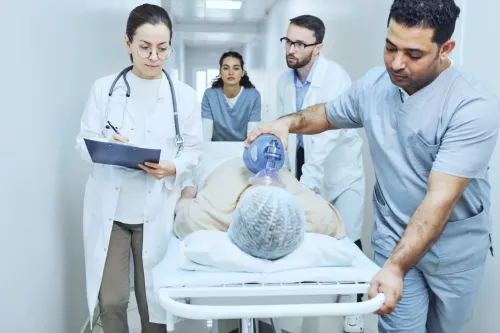
Calling is safer than using a private vehicle when a heart attack, stroke, severe breathlessness, collapse, or rapidly worsening symptoms are possible: the person can deteriorate or suffer cardiac arrest during transport, while emergency responders can begin treatment and alert the hospital.
- Keep the person seated or lying in a comfortable position. Loosen tight clothing, keep them still, and do not let them walk around or drive themselves.
- Put the phone on speaker and follow the dispatcher’s instructions. Give the exact address, a callback number, symptoms, and when they began; send someone to guide the ambulance.
- Unlock the door, gather the person’s medicines and identification, and note allergies. Do not give food, drink, or someone else’s medicine.
- If the person becomes unresponsive and is not breathing normally, start firm, fast chest compressions in the centre of the chest and use an automated external defibrillator (AED) if available. Follow its voice prompts.
- If they are breathing but unconscious, place them on their side unless you suspect a serious injury. Keep checking their breathing until help arrives.
Do not wait for a cardiologist appointment to arrange transport. New, worsening, or recurring warning symptoms need emergency reassessment, even if they briefly improve.
What happens at an emergency hospital versus a planned cardiology visit?
An emergency hospital assesses immediate danger; a planned cardiology visit evaluates a stable problem over time.
| Option | What happens | When it applies |
|---|---|---|
| Emergency hospital | The team checks vital signs, performs an examination, obtains and interprets a 12-lead ECG within 10 minutes for suspected acute coronary syndrome, and measures cardiac troponin. A normal first ECG does not rule out a heart attack when symptoms remain concerning. | Sudden or persistent chest pressure, breathlessness, fainting, severe weakness, or symptoms with sweating, nausea, or pain spreading to the arm, jaw, back, or neck |
| Planned cardiology visit | A cardiologist reviews your history and risk factors, compares previous ECGs or scans, chooses tests such as echocardiography or a stress test, adjusts treatment, and schedules follow-up. | Recurrent exertional discomfort that is not happening now, palpitations without fainting, high blood pressure, high cholesterol, an abnormal screening result, or follow-up after discharge |
A cardiologist in Bengaluru is the appropriate next step only while the problem is stable. If symptoms start, worsen, or occur at rest, do not wait for a clinic appointment; seek emergency assessment again.
Bring prior ECGs, echocardiograms, angiography or stress-test reports, discharge summaries, your medication and allergy list, and home blood-pressure or glucose readings. These records reduce duplicated testing, but gathering them must never delay emergency care.
How should you verify heart-care capability near Nagarabhavi?
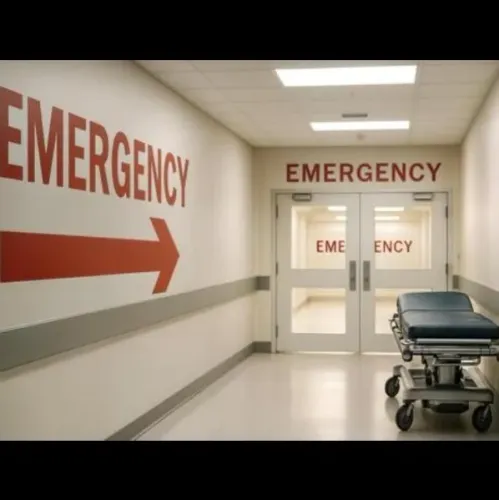
A “cardiology” label does not prove that a facility can resuscitate a patient, treat shock or open a blocked artery. For heart care Nagarabhavi, verify the service before a planned visit; during chest pain, collapse or severe breathlessness, call 112 and go to the nearest capable emergency department instead of comparing hospitals.
| Option | Confirm | When it applies |
|---|---|---|
| Emergency hospital | 24-hour reception, ECG, laboratory testing, monitored beds, intensive care and resuscitation equipment | Collapse, suspected heart attack, shock or severe breathing difficulty |
| Cardiology clinic | Scheduled cardiologist, risk assessment, testing and follow-up | Stable palpitations, hypertension, high cholesterol or abnormal screening results |
| Definitive cardiac pathway | Catheterisation laboratory on site, or a documented urgent transfer arrangement | Suspected ST-elevation myocardial infarction or another condition needing reperfusion |
| Multispeciality hospital | Emergency, imaging, surgery and critical-care coordination | Chest symptoms with trauma, infection, neurological signs, kidney failure or pregnancy complications |
Before booking a cardiology hospital Nagarabhavi, ask these specific questions:
- Is emergency care available 24 hours, including ECG, cardiac enzymes, blood tests and continuous monitoring?
- Is an intensivist or critical-care team available for cardiac arrest, shock and ventilator support?
- Is a cardiologist reachable urgently, and can the hospital provide or arrange transfer to a catheterisation laboratory?
- Who accepts the patient after hours, and how is ambulance transfer organised?
ABHANI LAKEVIEW HOSPITAL can be one local option to check against these criteria for planned reviews or urgent assessment, but do not delay calling 112 to verify its capabilities during an active emergency.
Related service
CARDIOLOGIST CARDIOLOGIST Abhani Hospitals is a trusted destination for advanced Cardiology treatment in Nagarbhavi, Bangalore, offering expert care for a wide range of heart... |
Frequently asked questions
When should you choose an emergency hospital instead of a cardiologist in Bengaluru?
Choose an emergency hospital for sudden, severe, or persistent chest pressure, squeezing, or pain, especially with spreading pain, breathlessness, cold sweating, nausea, dizziness, or fainting. Use a planned cardiology visit for stable symptoms that are not happening now.
How do heart attack and cardiac arrest symptoms differ?
A heart attack usually causes symptoms while the person remains conscious, such as chest pressure, breathlessness, sweating, nausea, or pain spreading to the arm, back, neck, or jaw. Cardiac arrest causes sudden collapse, unresponsiveness, and absent or abnormal breathing. Call 112 and begin CPR for suspected cardiac arrest.
What should you do before emergency help arrives for suspected cardiac symptoms?
Call 112, keep the person resting, unlock the entrance, gather their medicines and medical records, and follow the dispatcher’s instructions. If the person becomes unresponsive and is not breathing normally, start CPR and use an automated external defibrillator if one is available.
What should you verify when comparing heart-care hospitals near Nagarabhavi?
Ask whether the facility provides 24/7 emergency care, immediate ECG testing, blood tests, oxygen, cardiac monitoring, critical-care support, ambulance coordination, and referral or transfer pathways for catheterisation and advanced cardiac treatment.
Keywords