The right urology hospital depends on more than a specialist’s title or a hospital’s “super speciality” label. By comparing emergency readiness, diagnostic access, treatment scope, prostate evaluation, follow-up demands and travel practicality, you can choose care that fits both your condition and your circumstances.
Key takeaways
- Choose hospitals with 24-hour urology, imaging, anaesthesia and intensive-care support.
- Match your problem—stones, prostate disease, cancer or trauma—to the specialist’s scope.
- Ask who handles follow-up, complications and urgent symptoms after treatment.
- Compare travel time, appointment access and coordinated care across Bengaluru.
What a super speciality hospital adds to urology care
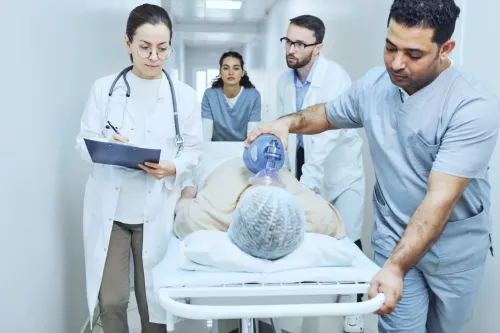
A hospital adds real value to urology care when it can move from diagnosis to treatment without sending you elsewhere. For complex or unstable cases, look for 24-hour urology coverage, emergency imaging, anaesthesia, intensive care, blood-bank support and interventional radiology.
| Capability | Standalone clinic | Hospital with comprehensive urology |
|---|---|---|
| Suspected stone | Consultation and referral | Non-contrast CT, blood tests and urgent decompression |
| Infection or obstruction | Delayed escalation | Antibiotics, drainage, surgery and critical-care support |
| Major bleeding or trauma | Initial assessment | Anaesthesia, transfusion, emergency surgery and intensive care |
| Complex procedure | Planned operation | Urology, radiology, oncology and rehabilitation coordination |
The phrase super speciality hospital urology in bengaluru should not substitute for checking these capabilities. A robotic or laparoscopic programme alone proves little; ask which operation you need, the surgeon’s experience with it, expected functional results, transfusion or conversion risk, and the plan if complications occur.
For sudden severe testicular pain with nausea or a high-riding testis, choose emergency surgical assessment rather than an outpatient appointment. Ultrasound must not create avoidable delay when torsion is strongly suspected.
After a road collision or pelvic fracture, blood at the urethral opening, inability to urinate or a high-riding prostate requires trauma imaging and specialist assessment; blind catheterisation can worsen an undetected urethral injury.
Match the urologist’s scope and urgency to your problem
A routine appointment suits recurring urinary symptoms without danger signs: weak stream, nighttime urination, urinary leakage, erectile dysfunction, male infertility, recurrent uncomplicated infections, or planned evaluation of stones and prostate enlargement. Choose a super speciality hospital urologist in Bengaluru whose scope matches the problem, such as stone care, reconstructive urology, uro-oncology or andrology.
Urgency changes when pain, infection or obstruction threatens kidney function.
| Situation | What to do | Why it matters |
|---|---|---|
| Stable weak stream or nighttime urination | Book a routine consultation | Assessment can include urine testing, PSA when appropriate, and evaluation for benign prostate enlargement |
| Visible blood in urine, new severe urinary symptoms, recurrent vomiting, or suspected stone | Seek same-day assessment | Clots, stones or infection can obstruct urine flow and require imaging or treatment |
| Inability to pass urine, especially with a painful full bladder | Attend urgent care immediately | Retention can damage the bladder and kidneys |
| Fever or chills with flank pain, vomiting, confusion or very low urine output | Go to an emergency department | An infected obstructed kidney needs antibiotics and urgent drainage, such as a ureteric stent or nephrostomy |
| Sudden severe testicular pain with nausea or a high-riding testis | Treat it as an emergency | Suspected torsion needs immediate surgical assessment; waiting for ultrasound can cost the testis |
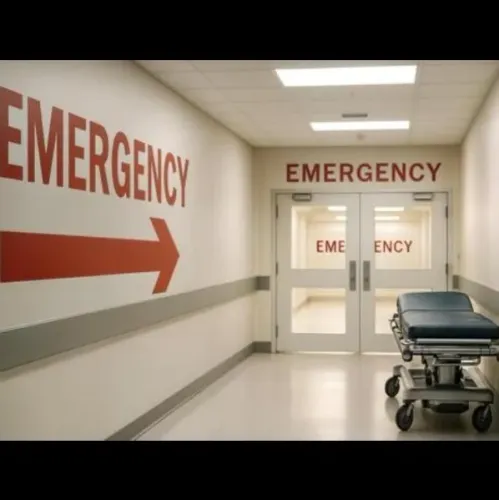
After a pelvic fracture or road collision, blood at the urethral opening or inability to urinate signals possible urethral injury. Do not allow blind catheterisation before specialist assessment and suitable imaging. A hospital advertising super speciality hospital urology in Bengaluru should provide 24-hour urology cover, emergency imaging, anaesthesia and critical care—not only scheduled consultations.
How to evaluate a prostate specialist hospital
A prostate specialist hospital should separate two questions: why urine flow is poor and whether prostate tissue contains cancer. Weak stream, urgency and night-time urination point to neither diagnosis by themselves; benign obstruction, infection, stones, urethral narrowing, neurological disease and cancer can produce similar symptoms.
1. For suspected benign prostatic enlargement, the clinician reviews symptom duration, medicines and urinary infections, then performs an examination that may include a digital rectal examination. Urinalysis checks infection or blood, while ultrasound or a bladder scan measures residual urine after urination. PSA testing is selective, not automatic.
2. An abnormal PSA is not a cancer diagnosis. Benign enlargement, inflammation and recent catheterisation or other instrumentation can raise it. Ask whether the hospital will repeat PSA at an appropriate interval, check for infection, assess PSA-related risk factors and interpret the result alongside the rectal examination.
3. Persistent concern can lead to multiparametric MRI. MRI helps identify a suspicious area and guide a targeted biopsy, but it cannot rule out cancer in every case and does not replace clinical judgement.
4. Ask whether biopsy decisions include systematic sampling as well as MRI-targeted sampling when indicated, and whether results are reviewed with you. A hospital that offers only symptom medicines but cannot coordinate MRI, biopsy, pathology and cancer treatment is not a complete prostate evaluation service.
For benign obstruction, alpha-blockers act relatively quickly but do not shrink the prostate; 5-alpha-reductase inhibitors work slowly and suit selected men with enlargement. Cancer assessment follows a separate diagnostic pathway.
What to expect from the first consultation and treatment plan
Bring previous scans, urine and kidney-function reports, a medication list, anticoagulant details, allergy history and a symptom timeline to a urologist consultation in bengaluru. The urologist will review your symptoms, examine you, and decide whether you need urinalysis, blood tests, ultrasound, non-contrast CT, PSA testing or another investigation.
Do not stop an anticoagulant yourself; coordinate any change with the prescribing clinician and urologist.
Your plan should state the diagnosis being tested, treatment alternatives, expected recovery, warning signs and follow-up date. Ask who will review results and what happens if symptoms worsen.
- Medicines, catheter placement and many evaluations are outpatient care.
- Shock-wave treatment, cystoscopy and selected ureteroscopic stone procedures often involve day care or a short stay.
- Major prostate, bladder, kidney or reconstructive operations usually require inpatient admission.
| Treatment setting | Common examples | What to expect |
|---|---|---|
| Outpatient | Medicines, catheter care, cystoscopy, selected shock-wave treatment | Return home after observation; arrange transport if sedated |
| Day care or short stay | Ureteroscopy, stent procedures, some biopsies | Discharge after recovery if pain, urine flow and vital signs are stable |
| Inpatient | Major cancer, prostate, kidney or bladder surgery | Monitoring, pain control, catheter management and discharge planning |
Fever or chills with flank pain, vomiting, confusion or very low urine output can indicate an infected obstruction. Emergency drainage with a ureteric stent or nephrostomy and antibiotics comes before stone removal. Sudden severe testicular pain with nausea needs immediate surgical assessment; do not wait for routine imaging or an appointment.
Compare hospitals by access, follow-up and Bengaluru logistics
A short commute matters less than a hospital’s ability to act when a stone causes infection or urine stops flowing. For a “urology treatment hospital nagarabhavi” search, ask these questions before booking:
| Decision | Ask the hospital | Why it matters |
|---|---|---|
| Stone assessment | Can you perform non-contrast CT promptly, and provide urgent decompression if needed? | CT detects and sizes ureteric stones more accurately than ultrasound; obstruction with infection can become dangerous. |
| Emergency cover | Is a urologist available 24 hours, with emergency imaging, anaesthesia, intensive care, blood-bank support and interventional radiology? | Sepsis, bleeding or kidney obstruction can turn a planned procedure into an emergency. |
| Urine retention | Can you manage difficult catheterisation and treat the obstruction or stricture? | Inability to pass urine with pain, fever or kidney impairment needs prompt drainage. |
| Trauma and testicular pain | Do you provide urgent surgical assessment for suspected torsion or urinary-tract injury? | Severe sudden testicular pain needs rapid action; after pelvic trauma, blind catheterisation can worsen a urethral injury. |
| Follow-up | Who reviews results, removes stents or catheters, and handles complications after discharge? | A distant hospital with unclear follow-up can add avoidable travel and delays. |
Compare travel time at rush hour, parking, ambulance access, pharmacy availability and whether reports are shared electronically. Ask ABHANI LAKEVIEW HOSPITAL the same questions rather than choosing on the “super speciality” label alone. Bring scans, kidney-function results, allergies, medicines and your anticoagulant list; never stop an anticoagulant without both clinicians’ advice.
Frequently asked questions
What does a super speciality hospital add to urology care?
It can coordinate diagnosis and treatment with 24-hour urology coverage, emergency imaging, anaesthesia, intensive care, blood-bank support and interventional radiology.
How do you choose the right urologist for your problem?
Match the urologist’s experience and scope to your condition, such as urinary stones, prostate disease, urological cancer, reconstruction or trauma.
What should you look for in a prostate specialist hospital?
Check whether the hospital evaluates prostate symptoms systematically, offers appropriate imaging and testing, explains treatment alternatives and provides follow-up.
What happens during the first urology consultation?
The urologist reviews your symptoms, medical history, medicines and test results, examines you when needed, then explains the diagnosis, options, risks and next steps.
How should you compare urology hospitals in Bengaluru?
Compare specialist access, emergency readiness, diagnostic and surgical services, follow-up arrangements, appointment availability and travel time from your location.
Keywords