
Severe breathlessness is not a problem to manage by waiting for a routine pulmonologist appointment. You will learn which symptoms need an ambulance or emergency hospital assessment, which problems suit same-day review, and how to prepare for either type of respiratory care.
Key takeaways
- Call an ambulance for severe breathlessness at rest, blue lips, confusion, or inability to speak.
- Use emergency hospital care when breathing worsens rapidly or oxygen readings keep falling.
- Bring medication lists, inhalers, prior reports, and oxygen readings to respiratory appointments.
- Book routine care for stable symptoms that are not limiting speech, walking, or sleep.
When breathing symptoms need emergency care
Severe breathlessness at rest is an emergency-department problem, not a routine respiratory consultation. If you are searching for an emergency hospital pulmonologist for Nagarabhavi, do not delay hospital assessment while waiting for an appointment when breathing is rapidly worsening or oxygen levels are falling.
Seek urgent hospital care if you have:
- Inability to speak full sentences, marked work of breathing, drowsiness, sudden confusion, fainting, or collapse.
- Blue or grey lips, oxygen saturation below 90%, or a rapidly falling oxygen reading.
- Severe chest pain, especially with breathlessness, sweating, weakness, or nausea.
- Coughing up more than a small amount of blood.
- Suspected choking or a blocked airway.
- An asthma attack that does not improve after repeated reliever treatment, or a silent chest with little or no wheezing despite severe distress.
These signs can indicate respiratory failure, pulmonary embolism, pneumothorax, severe asthma, pneumonia, heart attack, or another time-critical illness. A routine cough or wheeze appointment is appropriate only when symptoms are stable, oxygen is at your usual level, and none of these warning signs is present.
A seemingly acceptable peak-flow or home oxygen reading must not overrule worsening symptoms.
A practical route: ambulance, emergency hospital, same-day review or routine booking
Choose the route by severity, speed of change and oxygen level—not by whether the symptom started as a cough.
- Call an ambulance for collapse, blue or grey lips, new confusion, inability to speak, severe chest pain, suspected choking or rapidly deteriorating breathing. Do not drive yourself if you are faint or severely distressed.
- Go directly to an emergency hospital in Nagarabhavi for severe breathlessness, oxygen saturation below 90% after checking the device correctly, coughing blood, or suspected pulmonary embolism, pneumothorax, pulmonary oedema, sepsis or severe allergic reaction.
- Arrange a same-day review with a pulmonologist in Nagarabhavi for worsening but stable wheeze, a new chest infection with breathlessness, or oxygen above the emergency threshold but falling from your usual baseline.
- Book a routine appointment for stable persistent cough, recurrent wheeze, suspected sleep apnoea, unexplained exertional breathlessness, abnormal imaging, recurrent infections, or stable asthma or COPD review.
An emergency hospital such as ABHANI LAKEVIEW HOSPITAL can connect emergency, specialist and critical-care decisions when symptoms need rapid escalation. That local access does not replace an ambulance: call one first for red flags, and do not delay transfer while arranging a hospital or pulmonologist Nagarabhavi appointment.
Related service
PULMONOLOGIST PULMONOLOGIST Abhani Hospitals is a trusted destination for advanced Pulmonology treatment in Nagarbhavi, Bangalore, offering expert care for a wide range of lung... |
What happens during emergency pulmonologist assessment
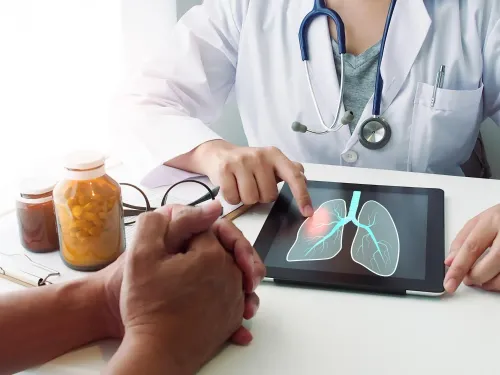
Triage starts the assessment. A clinician identifies immediate threats, then records respiratory rate, heart rate, blood pressure, temperature, mental status and pulse oximetry. A respiratory doctor in Bengaluru uses these findings to decide how quickly tests and treatment must proceed.
1. Oxygen is given when saturation or breathing indicates need. The usual acute target is 94–98%; use 88–92% for people at risk of hypercapnic respiratory failure, such as those with severe COPD, until blood-gas results are available. This target does not mean withholding oxygen from a critically ill person.
Clinicians provide oxygen, adjust the flow and check blood gases when carbon-dioxide retention is possible.
2. The clinician examines chest movement, breathing effort and breath sounds, looking for wheeze, crackles, reduced air entry or signs of pneumothorax. An electrocardiogram checks for heart attack and rhythm problems that can mimic lung disease.
3. A chest X-ray can identify pneumonia, pulmonary oedema or a collapsed lung. Blood tests assess infection, anaemia and other causes; an arterial blood gas measures oxygen, carbon dioxide and acidity when respiratory failure is suspected.
4. CT scanning is reserved for a clear indication. When symptoms, examination and pre-test probability suggest pulmonary embolism, clinicians may use a validated tool such as the two-level Wells score and order CT pulmonary angiography.
A home pulse oximeter supports this assessment but cannot replace it. Cold fingers, poor circulation, movement, nail polish, incorrect probe placement and darker skin pigmentation can distort readings; clinicians interpret the number alongside your condition.
Why similar breathing symptoms need different tests and treatments
The same breathlessness can signal very different emergencies. Severe asthma or COPD causes wheeze and increased work of breathing; pneumonia adds infection signs and hypoxaemia; pulmonary embolism often brings sudden breathlessness, pleuritic pain or coughing blood; pneumothorax causes abrupt one-sided pain and reduced breath sounds.
Crackles with hypertension suggest acute pulmonary oedema, while hives, facial swelling or wheeze suggests severe allergy. Fever, low blood pressure or confusion raises concern for sepsis; choking points to foreign-body aspiration, and chest pressure or sweating requires assessment for myocardial infarction.
A chest X-ray alone cannot reliably exclude pulmonary embolism or heart attack. An emergency hospital pulmonologist for Nagarabhavi may use an ECG, troponin and other laboratory tests, arterial blood gas analysis, CT pulmonary angiography, and the two-level Wells score to assess pulmonary embolism risk.
Treatment follows the cause and severity:
- A metered-dose inhaler with a spacer can match nebulizer delivery in many mild-to-moderate asthma attacks. Nebulization suits someone who cannot coordinate inhalation, is severely distressed, or needs monitored oxygen-driven delivery.
- Yellow sputum alone does not justify antibiotics, and uncomplicated acute bronchitis usually does not need them. Suspected pneumonia, bacterial COPD exacerbation or sepsis can justify antibiotics.
- Persistent respiratory acidosis, such as pH below 7.35 with raised PaCO2, may require hospital non-invasive ventilation.
- Pneumonia disposition combines oxygenation, respiratory rate, blood pressure, mental status, comorbidities and CRB65 or CURB65—not the X-ray alone.
An emergency hospital Nagarabhavi assessment is therefore safer than treating every wheeze alike.
What a routine respiratory visit is for—and how to prepare
A routine pulmonologist visit in Nagarabhavi, or a respiratory doctor in Bengaluru, suits stable problems: cough lasting more than eight weeks, recurrent wheeze, stable asthma or COPD, unexplained breathlessness on exertion, snoring or suspected sleep apnoea, recurrent chest infections, and abnormal chest imaging.
Spirometry is important for confirming persistent airflow obstruction, but results must be interpreted with your symptoms and examination. Defer testing during severe breathlessness, an active infection, recent pneumothorax, or when you cannot perform a forceful manoeuvre; the result may be unsafe or uninterpretable.
Prepare these details:
- Bring current medicines and inhalers, prior prescriptions, chest X-ray or CT reports, and previous spirometry results.
- Write down allergies, smoking history, occupational exposures, and the timing and progression of symptoms.
- Mention Bengaluru workplace or environmental exposures, such as dust, fumes, mould or traffic pollution, and possible triggers. Do not assume the climate caused the illness.
After an emergency visit, arrange follow-up to confirm the diagnosis, record your oxygen baseline, check inhaler technique and adherence, create an action plan, and review warning signs. Ask whether you need spirometry or a sleep study. Clear discharge instructions and planned testing reduce the chance that the next flare becomes another emergency visit.
Frequently asked questions
When should breathing symptoms be treated as an emergency?
Seek emergency hospital care for severe breathlessness at rest, rapidly worsening breathing, blue lips, confusion, fainting, chest pain, or inability to speak full sentences. A falling oxygen reading also needs urgent assessment.
Should I call an ambulance or travel to an emergency hospital?
Call an ambulance when the person is severely breathless, confused, faint, blue around the lips, or unsafe to transport by car. Use an emergency hospital for urgent symptoms that need same-day assessment but are stable enough for travel.
What happens during an emergency pulmonologist assessment?
The team checks airway, breathing, oxygen level, heart rate, blood pressure, temperature, and mental status. They may order a chest X-ray, electrocardiogram, blood tests, arterial blood gas, or CT scan based on the findings.
Why can similar breathing symptoms need different tests or treatments?
Breathlessness can result from asthma, pneumonia, chronic obstructive pulmonary disease, pulmonary embolism, heart failure, or another problem. The suspected cause, oxygen level, examination findings, and speed of deterioration determine the tests and treatment.
What is a routine respiratory visit for?
A routine visit suits stable cough, wheezing, sleep-related breathing concerns, controlled asthma or COPD reviews, inhaler checks, and planned test follow-up. Prepare a symptom timeline, medication list, inhalers, prior reports, and home oxygen readings.
Keywords